Last week there was a great interview in The Atlantic with Professor Tim Maudlin, who teaches the philosophy of physics at New York University. It’s a really interesting interview and it got me to thinking a number of things all at once.
The first thing it brought mind was the question of how philosophy, the love of wisdom, is applied to the various fields of human endeavor and study. Philosophy of Physics, Philosophy of Religion, Philosophy of Ethics, etc.. A few weeks ago I posted a blog about the difference between the fundamental questions asked by Science, Religion, Spirituality, and Philosophy. But this article started me thinking that a Universal Philosophy might encompass all of these questions. A universal philosophy might be able to examine the relationship between these questions.
The attempt to create a universal philosophy, a sort of theory of everything, that I am most familiar with is the Integral Philosophy of Ken Wilber. Wilber has spent the last thirty years working on philosophical framework to encompass religion, spirituality, psychology, and science. It’s a little to expansive and complicated to explore in detail, but the heart of it is a system he calls the quadrants of knowledge – a simple chart that shows outlines the relationships between the different areas of understanding. Wilber builds on the idea of holons by Arthur Koestler. A holon is both a thing unto itself and part of a whole. Wilber then arranges the different holons of the cosmos into quadrants. The quadrants are created from the intersection of two dichotomies: the interior/exterior and individual/collective. This presents four areas: individual interior (psychological), collective interior (cultural), individual exterior (physical/behavioral), collective exterior (physical/social). He then further extends levels of development within each quadrant (atom, molecule, cell, organs, bodies, etc.). You can see the chart below for a better idea of what I’m describing (from Kheper.com ).
Having read most of Wilber’s work, and much of the source material he used in formulating his theory, I find that I agree with the majority of his Integral Theory. There are problems with it, and there are some folks who think there are a lot of problems with it (see the writings at Integral World for a critique of Wilber’s theory, and in some case, Wilber himself.) I find his Integral Theory, a useful lens through which to examine the world and a means of seeing the interconnectedness of our individual lives with the cosmos around us. I’ve used it extensively in writing my non-fiction book exploring the connection between spirituality and globalization, The Chrysalis Age, and my feature film Dark September Rain, which explores what a spiritual response might be to an event as horrible as Sept. 11th.
However, while Wilber’s Integral Theory does provide a proposition for the relationship between the different aspects of existence, I don’t think it qualifies as a complete Universal Philosophy. The chart above is a great map the different quadrants at different levels of development, but it doesn’t help understand the relationship between the various holons at these levels in or between quadrants. A Universal Philosophy would, I think, attempt do that – explore the relationship between the questions of the different philosophical arenas, especially Science, Religion, Spirituality, and Ethics.
I don’t really have the time to come up with a fully functional Universal Philosophy (assuming I could) but it is an idea that I think I know I want to explore in my writing. Which brings me to the next thought that the interview with Maudlin prompted – How can sci-fi and Fantasy be philosophical fiction?
One of the things that I have always found most alluring about sci-fi is that there has always been a tradition of writers asking big questions, and if not directly trying to answer those questions, at least probing them in interesting and thought provoking ways. Because science fiction stories are almost always about ideas, often more so than character or plot, there has always been a strong philosophical streak in the genre. Stanislaw Lem’s His Master’s Voice is a perfect example of what I think represents philosophical fiction. In fact, after the sci-fi set up of the neutrino message from space, it seems increasingly focuses on philosophical questions.
So, how can a Universal Philosophy, a philosophy of everything, be articulated and explored in science fiction and fantasy? Sci-fi and fantasy are genre fiction, which to me means that they are far more concerned with things happening. I suspect this is why so many sci-fi stories, especially from the Golden Age, focused on ideas more than characters (see this great report by the BBC in the 1960s prior to the launch of Dr. Who). Ideas drive plot. Not that characters are not important. They are the means by which the ideas are explored and explained, often in lengthy info dumps or “philosophical semi-Socratic dialogue scenes” (Stranger in a Strange Land comes to mind).
It is one the reasons I think science fiction and sci-fi writers are prone to utopianism. What better way to explore the utopian ideals of your particular ideology than in some fictional future (Walden Two, Ecotopia Emerging, 2150 AD, Looking Backward, etc.).
I’m not really interested in promoting a particular ideology in my writing. I’m more interested in exploring the appropriateness of different ideologies or philosophies in understanding the cosmos and how to see the relationships between them to get a clearer vision, not just of reality as we experience it now, but of how to structure our personal and collective futures. Of course, I suppose the notion that is even possible is a bit of an ideology.
Regardless, I think sci-fi and fantasy are perfect playgrounds for philosophical explorations, as long as it is integral to the story, complements the plot, and is actively lived by the characters. Otherwise, it’s easier to write an essay.
I need to post a blog, but I’m a bit pressed for time working on Wizard of Time #2 (still no title), so as a placeholder until I can come up with something interesting, I figured I’d post a collage of my favorite sci-fi film posters. These aren’t my favorite sci-fi films (some are) just my favorite posters.
A few days ago I was looking through my old computer files for the stage play version of a screen play I wrote back in the 90s. I couldn’t find the play (seems it is lost on some 3.5” floppy disk), but I did come across something I had written in 1996 that seemed like it might be fun to post. (For those interested, the screenplay was Moonlight Serenade, and while it seems the stage version is lost for good, I have been thinking that I should re-write it as a novel some time soon.)
Apparently I wrote a Chronology of the Atomic Age – or as I put it in the subtitle: A Chronology of the Effects of Nuclear Physics on the Genre of Science Fiction Literature and Film.
I have only vague memories of researching and writing it. At the time I was living in a shoe-box with two of my friends on the Upper East side of Manhattan, subsisting on infrequent work as a production assistant or grip/electric for commercials and music videos, and writing as much as I could with the copious amounts of time off. I must have wedged this little chronology in between a couple screenplays.
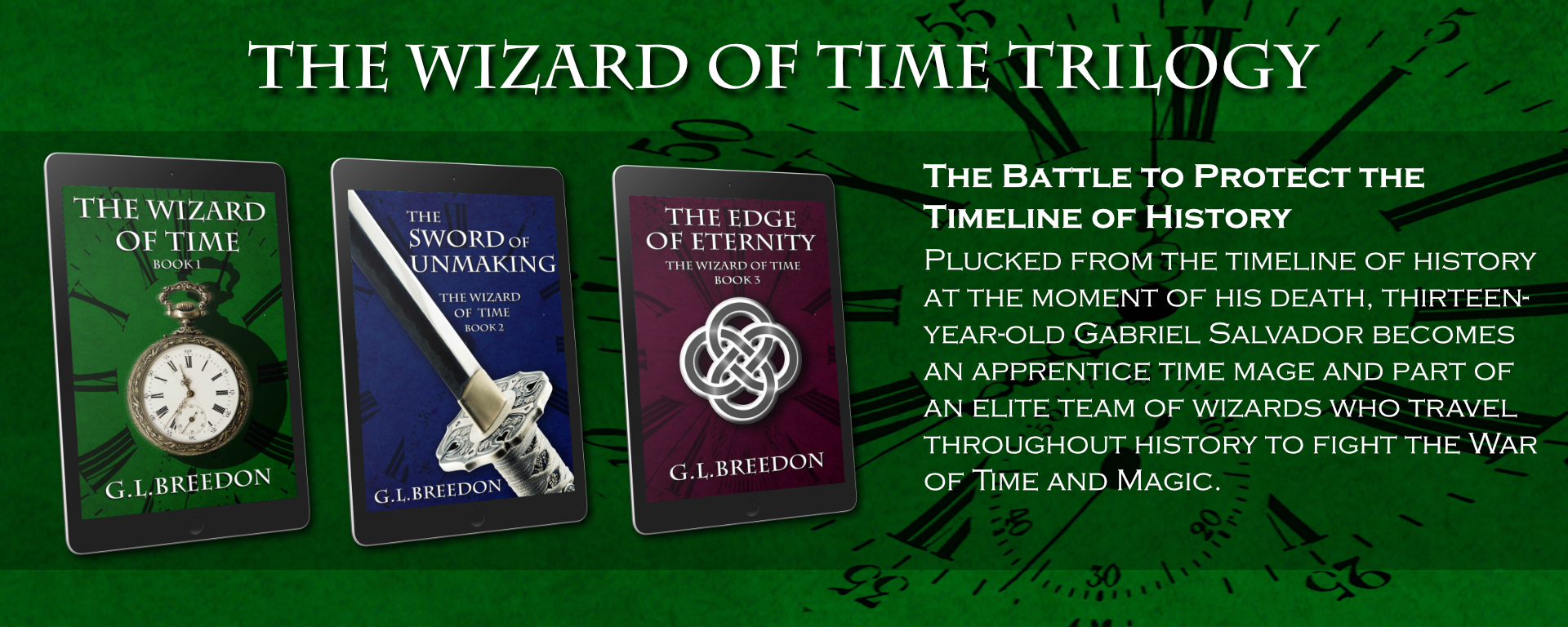
It’s a fun piece. I haven’t done anything with it, other than proof it once. It ends in 1996, and I haven’t extended the chronology to encompass years since. It would be much more interesting, I’m sure, if I took the time to hyperlink all the references, but time spent doing that is time I could be spending writing the next Wizard of Time novel. Considering that many of the very nice reviews I’ve been getting at Amazon lately mention the desire for a sequel – I think it’s clear where my time is better spent.
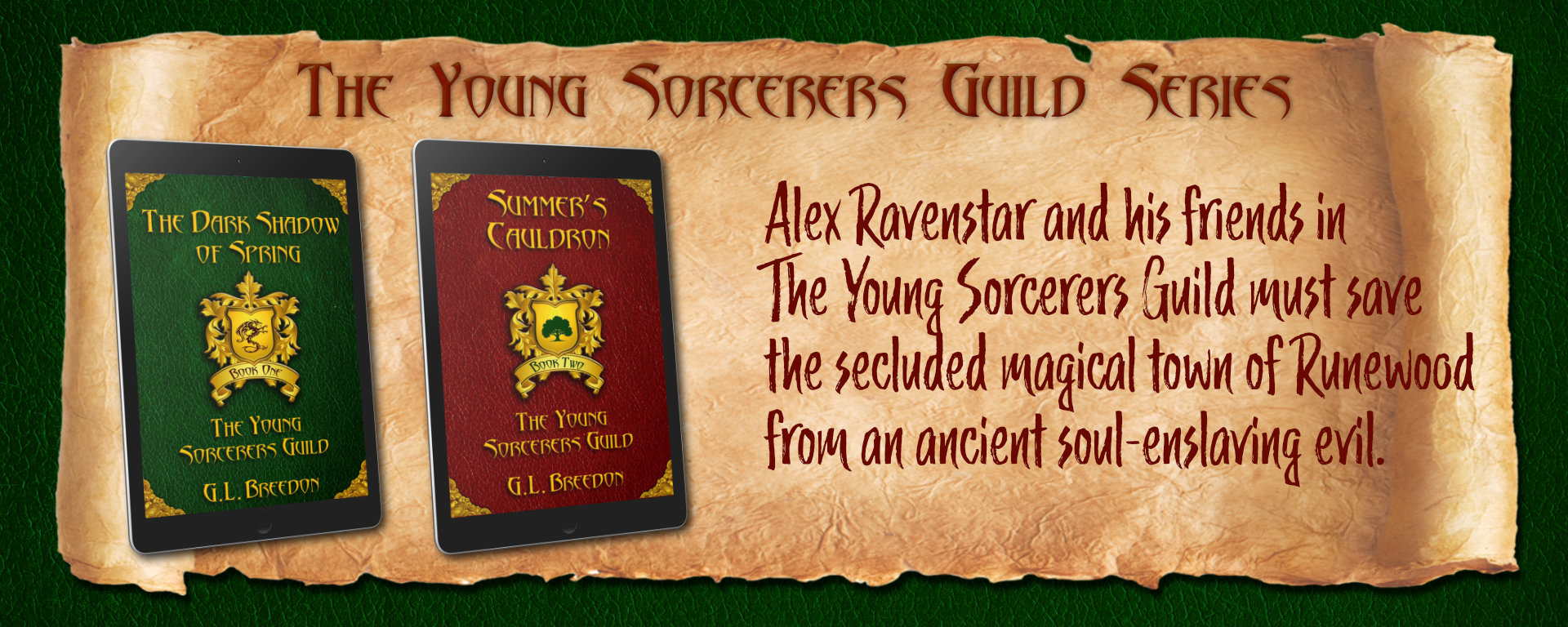
The Dark Shadow of Spring has a new cover. I was never happy with the old cover.I’m hoping this one helps sales a little. It will also make it easier to create a unified look for the four novels in The Young Sorcerers Guild series.
From October 2000 to spring of 2002 I took sabbatical to research and write a non-fiction book about the relationship between spirituality and globalization – examining the intersection between personal transformation and the transformation of the world. I called the book The Chrysalis Age. As part of that book I wrote a short dialogue between Science, Religion, and Spirituality. The book never found a publisher, so I am in the beginning stages of editing it down and indie publishing it.
I was thinking about the book and that dialogue the other night and I wondered about Stephen Jay Gould’s phrase “Non-Overlapping Magisteria” which he uses to suggest that Science and Religion operate in separate realms that need not be in direct conflict with one another. Essentially, Science investigates the external world of facts and process, and Religion investigates the internal world of morals and meaning.
Which left me wondering where Spirituality falls in that map of understanding. And then, I started wondering what the essential questions were that are posed by Science, Religion, and Spirituality and how the those questions relate and how they create conflict between these three realms of inquiry. If we put Science and Religion in two separate boxes, does Spirituality sit in a box between them, mediating their differences, or does it have one foot in both boxes, or does it refuse to sit in a box at all?
Richard Dawkin’s critique of the Non-Overlapping Magisteria proposition points out that the belief in a supreme supernatural being is outside the realm of morals and meaning and squarely in the middle of the realm of how the universe works and why. In fact, it seems to me that the realm of morals and meaning was largely divorced from religion by Enlightenment Philosophy. So, do we need to add a fourth category of Philosophy to the equation?
Also, do we have to differentiate between Religion and Spirituality? I think we do, and I think that difference can be summed up as Theology vs Mysticism. I think of theology as the rules and rationalizations of a belief system and mysticism as a trans-rational experience of reality (see an excerpt from The Chrysalis Age –Transformation and Transcendence for a more in depth definition of spirituality).
Some central questions for each realm (off the top of my head and without research to support them):
Science
Religion:
Philosophy:
Spirituality:
- How does the universe work?
- Why does it work the way it does?
- How did the universe come into being?
- How did life originate in the universe?
- What is consciousness and how does our brain create/experience it?
- What is the ultimate nature of reality?
- How did the universe and life come into existence?
- Assuming there is a divine supernatural creator(s) of the universe – what obligation to we owe that being(s)?
- What should our relationship be with such a supernatural being(s)?
- Based on what we believe about this supernatural being, how should we live our lives personally and collectively?
- Based on what we believe about this supernatural being, what actions are moral and which immoral?
- How should we live our lives personally and collectively?
- What actions are moral and which immoral?
- What is the ultimate nature of reality?
- What is that nature of art and beauty?
- How can the results of scientific inquiry (ie. technology and knowledge) be used to benefit humanity?
- How can scientific knowledge be used to inform ethics?
- What is the ultimate nature of reality?
- How can we know/experience this ultimate nature of reality directly?
- How can we find inner peace (become more patient/ loving/ compassionate, etc)?
- How does a direct experience of the ultimate nature of reality suggest we should live our lives?
- What does a direct experience of the ultimate nature of reality suggest are moral and immoral actions?
I find that an interesting (if partial) list of central questions. Obviously, some of those questions occur in more than one realm of inquiry – which is the source of the tension between them. The cause of that tension is the means of inquiry that are used to examine the questions of each realm.
Science relies on the examination of factual evidence, observation, and predictive reasoning to prove or disprove a hypothesis suggested to answer a central question. Religion relies on a host of things to try and answer its central questions: insight, visions, traditional stories, inductive reasoning, etc. Philosophy tends to rely on deductive reasoning and observation. And Spirituality relies largely on direct inner experience. No wonder they can find it difficult to play nice.
To me, these questions raise another question in relationship to storytelling: How can my characters explore these questions? Importantly, which realm the characters explore the question from it will impact not only how they investigate those questions, but how they will interact with and conflict with other characters. The nature of how the questions are posed in each realm and how they investigated has an impact on how much conflict there will be between one realm and another and within realms. Conflict is the heart of drama. For instance, while it is not uncommon for people in the realm of Science to disagree with one another, they don’t launch wars and murder other scientists based on these diverging opinions. Yet in the realm of Religion, this sort of violent conflict has historically been common place.
It gives me a lot to think about. Not really for The Young Sorcerers Guild series, but definitely for The Starship Destiny series, and to a lesser degree, The Wizard of Time series. It will also have a huge impact on an epic fantasy series I’ve been plotting out for the last year or so. However, I doubt I’ll have time to write that for a year or two, so I have plenty of time to think about these questions some more.
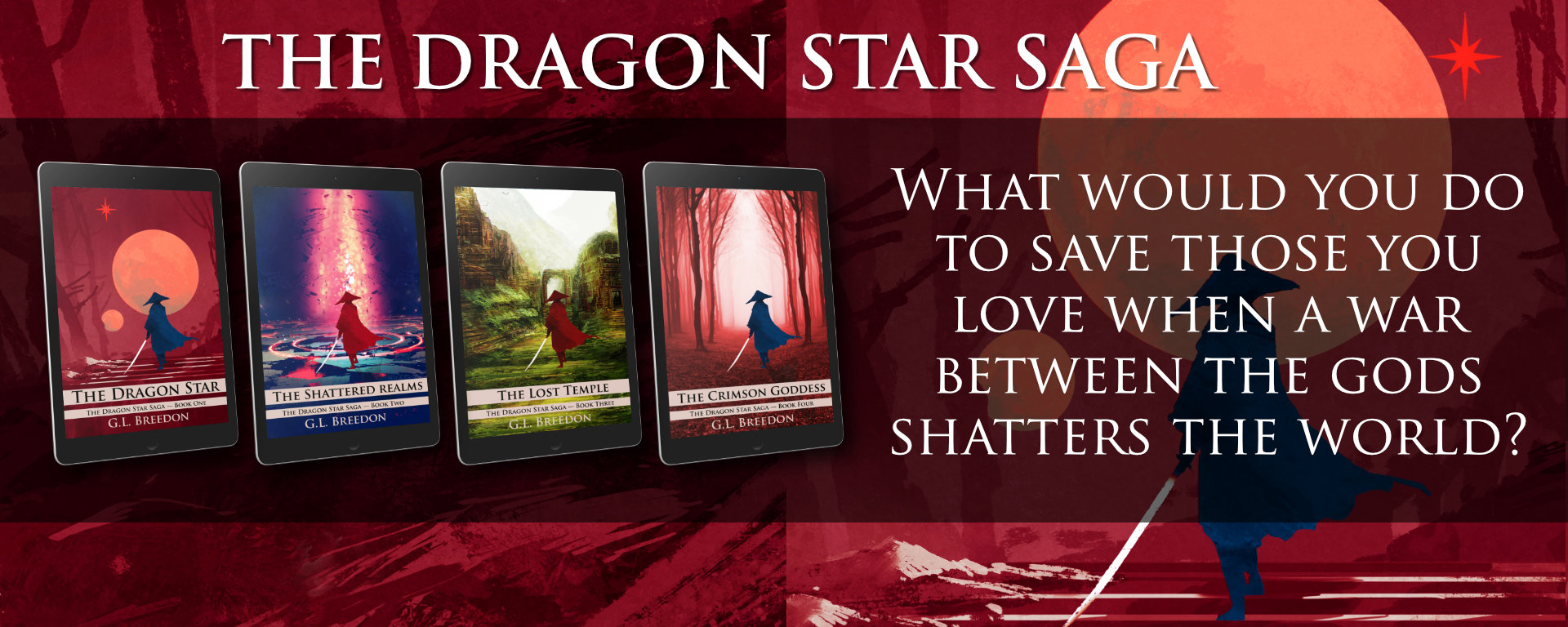
It’s a busy week and there isn’t as much time for blogging as I would like. The day job is quite busy and I’m in the final stages of work on Summer’s Cauldron (YSG #2) so I can send it to the editors next week. I’m also reworking the cover for the first YSG novel, The Dark Shadow of Spring, to be more visually engaging and have a thematic look that will carry over for all four novels in the series.
I saw a fun essay at the AV Club about dystopian sci-films from the 1970s and it got me to thinking about the way the future gets represented in sci-fi. Actually, it got me thinking about more than that. I started out wondering why so few sci-fi stories (at least in film and TV) present a utopian tinged future and instead give us a glimpse of one or more versions of a dystopian nightmare. It also got me to thinking about how this dichotomy of utopia/dystopia plays out in fantasy stories.
My thoughts today are little different. It’s easier to find negative/dystopian sci-fi visions of the future in film and TV than positive/utopian visions. Star Trek, in all its various incarnations, is probably the most easily identifiable story set in an utopian, or at least semi-utopian, future. I think that is a strong component of its enduring popularity. In fact, I’m hard pressed to think of any other TV show or film that has quite that level of utopian appeal (Babylon 5, maybe – but I really can’t speak to that as I’ve never made it past the first season). The appeal to some future world where things will be better has a strong attraction for many people. Of course, it means that the stories will have to focus on building conflict and drama, not through struggles against or with society, but between characters, or between the utopian society and some external threat (the Romulans, the Klingons, the Borg, etc.).
The attraction of a dystopian setting for telling sci-fi stories is easy to see. A dystopian background creates foundational dramatic atmosphere for the story being told. Star Wars doesn’t work dramatically without out the evil of the empire. Battlestar Galactica wouldn’t have the same dramatic hook if the cylons aren’t trying to destroy the humans. A dark and stormy future makes it that much easier for the story tellers to capture the attention and the imagination of the audience.
I believe this same dichotomy of utopia-dystopian tension plays outing in fiction as well, both sci-fi and fantasy. In fact, I’ve always found it curious that so many fantasy stories, especially epic fantasy stories, are set in a version of the European Middle Ages, with magic added in. What’s curious about that, to me, is that I have always felt that while sci-fi is looking toward some golden (or dark) age in the future, fantasy is usually looking back toward some golden (or dark) age in the past. It’s curious that in looking back to some golden age of heroes and magic so many writers settle on the Middle Ages, rather than some point in pre-history. But, maybe that setting is the perfect combination of these utopian and dystopian impulses. The golden age of magic and heroes set in the darkest ages of European civilization.
That actually brings me back to the AV Club essay which spent most of its time discussing Logan’s Run. In a way, that film (and the book it was based on) area perfect combination of the utopian and dystopian story tropes. There is the bright golden future where everyone has every need supplied, but behind it is the dark reality of an early death, so that others can live long lives and control society at the expense of the young.
I must admit, these thoughts aren’t as coherent as I had hoped, but they will have to suffice, as I really need to get come editing done on Summer’s Cauldron.
Most of these prophecies have their origin in the Mayan calendar and the myth of a fifth age to begin, after 5125 years, on December 21, 2012. Some think this will be a new spiritual age, others think it will be a new age born out of some apocalypse.
Author, Graham Hancock wrote a really fun book back in the 90s exploring these ideas, particularly the notion that a polar shift might occur in 2012. It’s called The Fingerprints of the Gods. I read the book first as fun and then again as research for a screenplay.
The script was about a cascading series of earthquakes destroying the world and what happens when Jupiter’s moon Europa leaves its orbit and heads for Earth. It’s called, The Day the Sky Fell. Yes that’s an homage to The Day the Earth Stood Still. So is the script in many ways. You can find it as a PDF on my other website if you are interested. It’s a sci-fi story with a spiritual theme. I should probably look into rewriting it as a novel. It never attracted much attention as a screenplay. It would require too large a budget for one thing. In case you haven’t noticed, almost all big budget films these days are based on pre-existing material. So, I guess I really should re-write it as a novel, so maybe someone will be interested in it as a screenplay.
I wonder how many copies of a sci-fi novel you need to sell before Hollywood will become interested in the story. It doesn’t seem that you need to sell many copies of a graphic novel/comic book before Hollywood can justify turning it into a movie (with not so surprising results).
Maybe I should turn the story into a comic book. If only I could draw. And color.
But, I guess I need to get it all done before Dec. 21st. Actually, since I doubt the world will end, and I doubt there will be some great spiritual revolution, I’ll work on writing Wizard of Time – Book 2. If you’re interested in why I think a spiritual revolution would be a good thing, even if I doubt it will happen, you can check out an essay I wrote several years ago after researching and writing a book about spirituality and globalization.
I came across two things that at first seemed unrelated to me that later came together in my mind while I was walking home last night. The first is a fun blog over at Electrical Engineering Times. Clive Maxfield has a blog where he often discusses sci-fi geek stuff, because who better to enjoy sci-fi geek stuff than electrical engineering geeks. He has a post in which he listed his favorite generation ship sci-fi novels. There is a nice entry on Wikipedia that explains generation ships and gives some examples from literature and film. There is also booak by Simone Caroti called The Generation Starship in Science Fiction: A Critical History, 1934-2001. I haven’t read the book (it’s a bit pricey), but it sounds interesting from the bits I’ve perused on Google Books.
Maxfield lists several novels: Robert Heinlein’s Orphans of the Sky, Brian Aldiss’ Nonstop (aka Starship), Gregg Bear’s Eon, John Varley’s Titan (which isn’t really a generation ship), and Arthur C. Clark’s Rendezvous with Rama. He also mentions the films Pandorum and Wall-E. The only one I hadn’t read or seen was Harry Harrison’s Captive Universe, which I promptly ordered used from Amazon. However, Maxfield didn’t mention the Canadian TV series Star Lost (created by Harlan Ellison), which is a fun but, dated series.
It’s interesting how many generation ship stories revolve around a crew that has forgotten they are on a starship. I wonder why that is?
Something else I saw made me think about generation ships, or at least colony ships. Physicist Marcin Jakubowski, founder of Open Source Ecology, is leading a team in assembling the Global Village Construction Set, an open source set of blueprints and instructions for fabricating the 50 essential industrial machines for a modern civilization. The intent is that communities and governments in developing nations can use this construction set to jump-start their societies and economies and create higher standards of living for their citizens.
That’s a great idea, and a huge help to people living in developing nations. Of course, my first thought was that these are the same 50 industrial machines that would be required for creating a modern civilization from scratch on a new planet.
And thought led me to thinking about the work of the folks at the DARPA 100 Year Starship Study and Paul Gilster’s Centauri Dreams blog. The 100 Year Starship Study was a symposium held this past October to explore the various disciples necessary to mount an interstellar expedition while Glister’s blog is a more personal exploration of the same subjects.
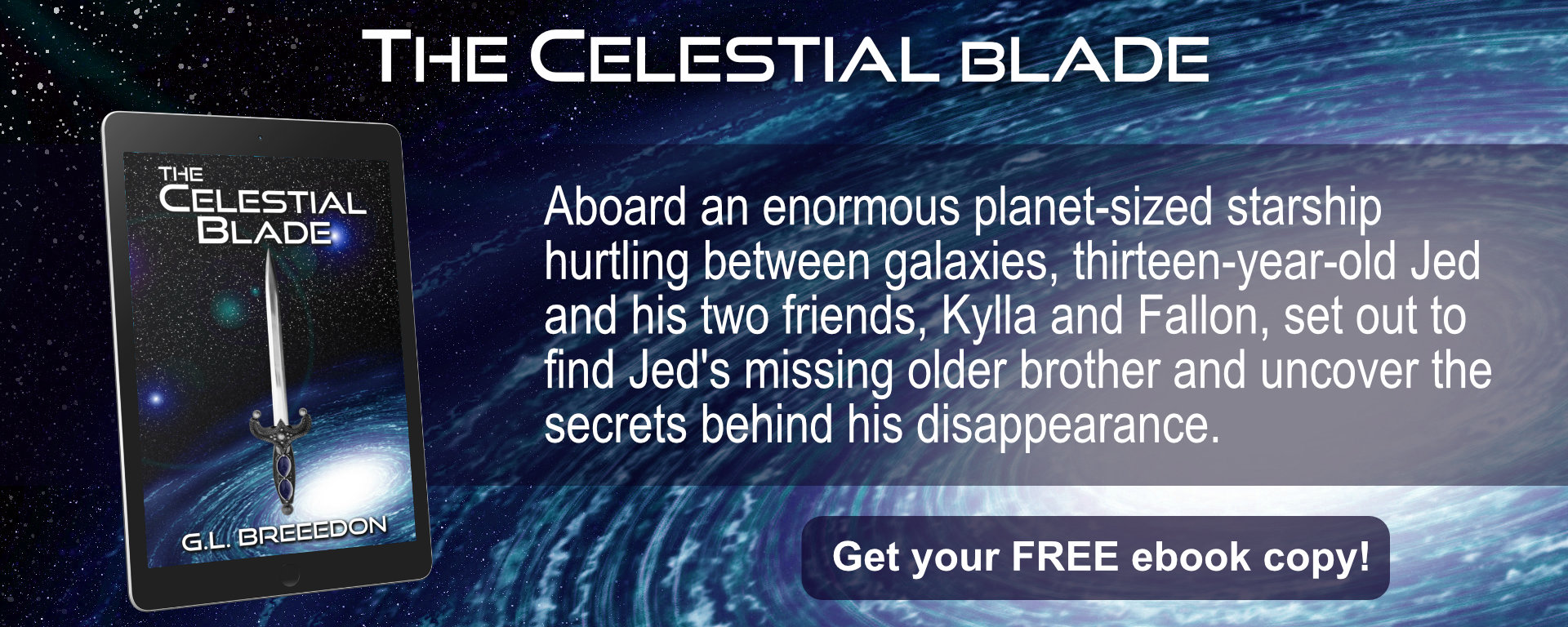
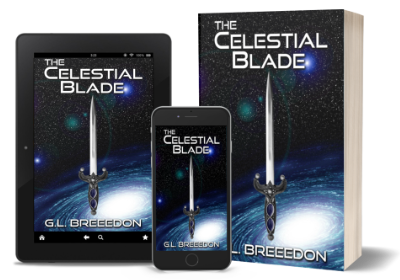
I’ve given some thought to what it might be like to live on a generation ship. The Celestial Blade (The Starhip Destiny – Book 1) takes place on a generation ship making a 2000-year voyage to the Andromeda galaxy in hopes of responding to a radio message. It’s not just humans, but several species, each in their own continent-sized compartment, making the journey. The story had less to do with the end result of the voyage and more to do with a mutiny, but it’s fun to contemplate the process of travelling great interstellar distances in a mammoth starship. Clearly it’s a theme that has resonated with some of the best sci-fi writers. Hopefully, my contribution to the sub-genre will be as entertaining and thought provoking
Farhad Manjoo has an article this week in Slate where he states that we should abandon small local bookstores because they are inefficient and their books tend to cost more. They also have limited shelf space, thus limited selections, no reviews, and only employee recommendations for purchasing guidance.
I think both articles (and the attending comments to them) miss the point. Yes, some people do like supporting their local indie bookstores and don’t mind paying more for their books, but Manjoo’s criticisms are still valid. But, as the world of readers moves toward greater and greater ebook consumption, those criticisms of small bookstore will continue to be true. It will be harder and harder for a small bookstore with physical books to compete with the endless ebook shelves that Amazon and others make possible.
Which does not mean that our local bookstores need to disappear – they need to re-envision themselves as local reading centers, rather than local bookstores. They need to rethink the business model of selling paper books, because except for high-end coffee table books and some text books, book sales will be dominated by ebooks. Eventually, I believe, competition from indie authors and smaller ebook presses will bring the price of mainstream ebooks down to the point where they are not just competitive with paper books, but low enough to make the choice obvious. At that point, indie bookstores will need to sell something else. Coffee is probably not a bad idea.
I’m a big fan of local businesses as they tend to drive their profits back into the communities they serve rather than shareholders on the other side of the country or the world. But they need to give you a reason other than local loyalty to walk through the door. There is a lovely little indie bookstore in my neighborhood, but I rarely frequent it. Firstly, they have a woefully small selection of sci-fi and fantasy. Secondly, I tend to buy my books at the used bookstore down the street, or for half the price from Amazon, or as an ebook. There just isn’t much reason for me to wander in to browse. I suppose a store that is more genre oriented might get better foot traffic depending on the location. Forbidden Planet, in Manhattan gets plenty of foot traffic (although I have no idea how their sales are doing and they sell much more than just books). And Books of Wonder (also Manhattan) wisely gave up floor space to combine with Cupcake Café.
Author readings and musical performance can bring some people in, but I just don’t see how indie bookstores are going to survive trying to lure people into buy books they can get cheaper as ebooks directly to their reading device without having to reach into their wallet.
On the other hand, I can’t see people giving up reading in coffee shops. People like to get their coffee and sit and read. They like to sit and read period. So, don’t try to sell them books, sell them an elevated experience of reading. An experience they maybe can’t get at home. A quiet, attractive, well-lit place to read, surrounded by books that they can read sitting on a nice couch sipping a cup of tea, or high priced books they can rent weekly for a small fee, or even courtesy ebook readers with paid local advertising. And while they might still sell a few paper books, maybe they sell everything else that a reader could want: ebook readers, slip cases, lamps, pro-reading t-shirts and hats, parchments, pens, paper, and anything else they think people will like. Maybe they still have free readings, but maybe they also have paid classes to explore authors and genres. Maybe even classes on writing and ebook publishing.
Those are just some ideas off the top of my head. Maybe some would work. Maybe some wouldn’t. But indie bookstores will have to learn to adapt or they will end up like Borders. Which would be a shame.
io9 has a great list of retro sci-fi films. Makes me want to watch Buckaroo Banzai again. http://t.co/tX1aKPqd
Could the future of cheap hydrogen based energy be right around the corner? Seems like it http://t.co/RmE69d3H
Interesting article on the future of sci-fi fandom and what it means for writers: http://t.co/K69R8JS9
Great article on the future of books (e and print): Lots to think about for indie authors traditional publishers. http://t.co/Ge2E9lwN
Kosmosaic Books Newsletter
Please sign up to receive the Kosmosaic Books Newsletter. Your information will not be shared with anyone and will only be used to send you the Kosmosaic Books Newsletter once every few months.